Newly discovered ‘Sasanian’ rock engravings depict mountain goat, horses in southern Iran
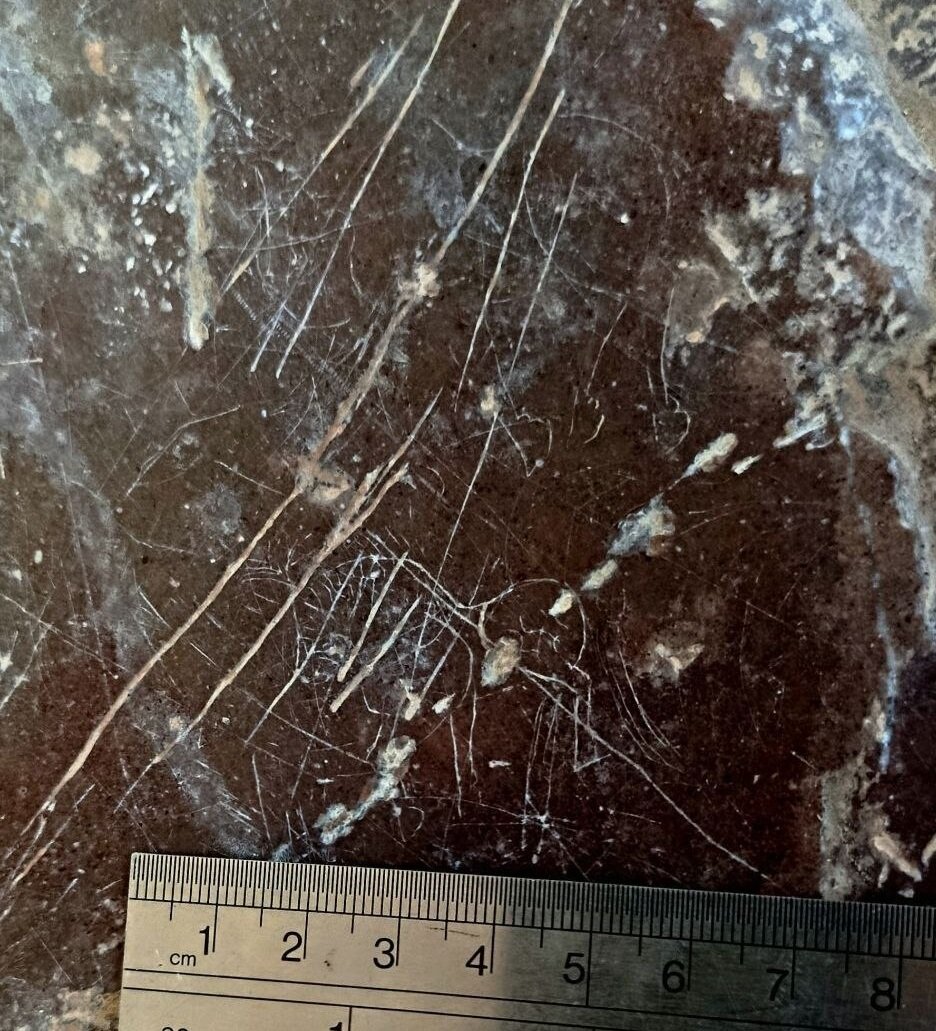
TEHRAN – Needle-engraved rock art depicting a mountain goat and horses dating to the Sasanian period (224–651 CE) have recently been found on the rocky outcrops of the Marvdasht Plain in southern Iran.
Abulhasan Atabaki, an archaeologist, said the engravings were created by skilled artists over the centuries on the rocks of the plain, offering new insights into the symbolic traditions of Sasanian art, Ana news agency reported on Tuesday.
According to Atabaki, the mountain goat was among the most important themes in Iran’s rock art and symbolic imagery from prehistoric times to the present. The newly identified image, measuring 5 by 4 centimeters, depicts the animal in a seated position and was made using a needle-scratching technique.
He said the seated posture traditionally carried connotations of calm, stability and authority in Iranian visual culture.
Atabaki also highlighted the significance of horses in ancient Iranian art, describing them as key elements of visual and narrative representation whose meaning extended beyond military and equestrian functions.
“From the Achaemenid to the Sasanian periods, horses were interpreted within the framework of royal ideology and the symbolic system of power, rather than merely as instruments of warfare or realistic representations of the animal,” he said.
Najmeh Ebrahimi, a researcher in history, said the mountain goat had long been associated with “Farr-e Izadi”, the divine glory believed in Sasanian texts to be the source of royal legitimacy and splendor.
She said the recurring appearance of the mountain goat on Sasanian royal crowns, seals, metal vessels, textiles and architectural decorations demonstrated that the motif held a significance beyond ornamentation and formed part of the official and courtly artistic symbolism of the period.
Ebrahimi said the horse motif in Sasanian art could be understood through three main functions: ideological, military and ritual.
The ideological function was linked to the representation of royal legitimacy and authority, while the military function reflected the importance of heavily armed cavalry in the Sasanian power structure.
The newly reported engravings are expected to contribute to a broader understanding of the symbolic language of Sasanian rock art and the cultural significance of animal motifs in ancient Iran.
AM
Leave a Comment